







Giant eucalypts found in ... Europe!

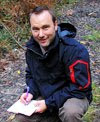
Ever since seeing the inspiring red tingle (Eucalyptus jacksonii) trees in the far south-west of Western Australia as an eight-year old, I have been fascinated by the biggest and tallest trees of different species. And like all eucalypt-obsessed Australians (I assume there are many!), I like to claim that the tallest tree ever was a 130+ meter mountain ash (E. regnans) felled in Victoria sometime in the 1800s, even if the actual evidence for such a giant is scant.
But even if the tallest contemporary tree species is a non-eucalypt - the redwoods (Sequoia sempervirens; a non-flowering softwood up to 115 m tall) of the west coast of North America, we gum nuts can still brag about having the tallest ‘hardwood’ species, the tallest ‘flowering plant’, and the tallest tree in Australia (all applicable to the 99 m “Centurion" E. regnans in Tasmania - visit Tasmania's Giant Tree Register for more data). But that’s not enough for me…
While visiting my partner Annett in Germany in November 2010, I thought we should take the opportunity to see some eucalypts in southern Europe. There are ample data on big trees (‘big’ being variously defined) but few data on tall trees. Web-based searching led me to the web pages of Gustavo Iglesias (Eucalyptologics & GIT Forestry), where two potentially tall trees were highlighted – the ‘Grandfather Tree’ in Spain and the ‘Karri Knight’ in Portugal. What followed was a rapid-fire five day field trip with Gustavo, chasing eucalypts along the Atlantic coast of these two countries.

The five days with Gustavo were at times chaotic (in a Spanish sort of way!) but highly productive. We recorded over 40 different eucalypt species, including a number of species which are either naturally rare or poorly known in cultivation in Australia. But the highlights were the tall eucalypts, including:
1) The opportunistic find, following on from earlier field research on old Portuguese records by Gustavo & Californian eucalypt expert Matt Ritter, of a massive E. regnans (mountain ash) in Portugal measuring about 65 metres tall and 2.66 metres diameter at breast height;
2) Stands of E. globulus (Tasmanian blue gum) near Viveiro in Spain with trees at least 68 metres tall, and including the ‘Grandfather Tree’;
3) The Vale de Canas near Coimbra in Portugal where, despite being devastated by fire a couple of years ago, there were several eucalypt species greater than 65 metres tall, including the ‘Karri Knight’, a lone Eucalyptus diversicolor (karri) in a forest of other eucalypt species.
Using a laser hypsometer, we made about 50 measurements of the ‘Karri Knight’, using different methods and from different positions. A height of 72 metres (accurate to within 0.5 m) was established, making this tree the tallest measured tree in Europe west of the Caucasus Mountains.
Interestingly, immediately adjacent to the Karri Knight was a planted Araucaria bidwillii (Bunya pine), with a height of 50 metres, making it taller than any measured indigenous Bunya pines from Queensland, Australia.
So it now appears that the tallest measured tree in each of Australia, Europe and Africa are eucalypts (and each a different species – E. regnans, E. diversicolor and E. saligna respectively). Tall-tree height data are virtually unknown in South America, and are poorly verified in Asia proper, so it remains to be seen if we can add eucalypts as tallest trees for these continents also.
Australia's National Big Tree Register established
On a more local level, a National Register of Big Trees in Australia has recently been established by Derek McIntosh of Sydney (see http://nationalregisterofbigtrees.com.au/). While this web-based database aims to document ‘big’ rather than just tall trees, many of Australia’s tallest trees can be found listed on the database. With the aid of the laser hypsometer that Derek has kindly lent me, I have nominated and measured many big and tall trees; however, as the project is in its infancy, there is still a paucity of data in many regions and for many species. In particular, there are very few data on tall trees in Queensland and the Northern Territory.
I would be most pleased to receive any nominations of potentially big or tall trees (for any species), which I would endeavour to measure and document, with due acknowledgment to the nominator. If you know of a tree that potentially is taller than those already listed, drop me an email at Currency Creek.
And who is that guy?

Dr. Dean Nicolle, "El Cazador de Eucaliptos", has discovered or co-discovered +50 new eucalypt taxa in Australia, helping the known eucalypt biodiversity threshold surpass 1000 taxa. He is the Director of Currency Creek Eucalypt Research Arboretum, the most complete eucalypt collection and genetic repository in the world, with +90% of those taxa represented and cultivated for scientific purposes. He has collected and preserved +5000 eucalypt genetic lines, many of them endangered species or subspecies, some facing extinction risks. He is author or co-author of +50 scientific articles on eucalypt botany, and his work has made +40 extra articles by several international scientific research groups possible. Arborist and ecologist, his remarkable eucalypt tree inventory surpasses +9000 specimens, and from it, +4000 technical reports on remarkable eucalypts have been produced, including +150 new additions to the Australian Giant Tree National Register.

Dean Nicolle's ongoing research is also part of the collaborative efforts of the Cooperative Research Center for Forestry, an Australian national research consortium with headquarters in Hobart, Tasmania. The CRC Research Programme Four: "Trees in the Landscape", coordinated by Prof. Dr. Bradley Potts, one of the world leading eucalypt geneticists & recipient of the Royal Society's Clarke Medal, has one of its focus on Biodiversity, including the monitoring and management of biodiversity in forest landscapes and eucalypt gene pool management. Latest news about research results by this multidisciplinary scientific team can be read at its BioBuzz Newsletter.
Chasing Giants: Images from the Giant Eucalyptus Tree Trek in Spain & Portugal

Figure 1. The white & brown-trunked tree at the Vale de Canas near Coimbra in Portugal is the tallest measured tree in Europe – a Eucalyptus diversicolor (karri) known as “Karri Knight”, with a height of 72 metres measured using a laser hypsometer. Immediately adjacent is a tall Araucaria bidwillii (Bunya pine) with a height of 50 metres. Surrounding these trees are other tall specimens of E. viminalis, E. globulus, E. obliqua and E. regnans, representatives of each measuring over 60 metres tall. All these species are naturally indigenous to Australia but have been grown in Europe for over 150 years.

Figure 2. The measurement team are (left to right) Paulo Ferreira (University of Coimbra, Portugal), Gustavo Iglesias (GIT Forestry, Spain), Dean Nicolle (Currency Creek Arboretum for Eucalypt Research, Australia), Annett Börner (Max Planck Institute for Biogeochemistry, Germany), Yolanda Fernández (Ence - SilvaSur, Spain) & Miguel Ángel Cogolludo (Ence - NorFor, Spain).

Figure 3. Our Spanish Eucalyptologist (gum nut) colleague and local guide Gustavo Iglesias relaxes at the base of the 72 m tall karri, tallest standing measured tree in Europe. The small diameter of the tree relative to its height, is indicative of its relative youth (about 120 years old).

Figure 4. Dean Nicolle and Gustavo Iglesias identify other potentially tall trees in the Vale de Canas near Coimbra in Portugal. (Photo courtesy Annett Börner - Max Planck Institute for Biogeochemistry)

Figure 5. Dean Nicolle appears gnome-like when standing near the giant “King Regnans” tree at Bussaco in Portugal. The “King Regnans”, a Eucalyptus regnans named as such following its serendipitous re-discovery by Gustavo Iglesias on this field trip, is 64.5 (+/- 1) metres tall. Near it, the tallest of the twin redwoods in the background (also exotic to the region) is 52 metres tall.

Figure 6. Dean Nicolle and Annett Börner measure the diameter of the “King Regnans”. Diameter at breast height is 2.66 m. This tree had the greatest diameter of the eucalypts we measured in Spain and Portugal, but it is not the fattest one standing. Note the autumnal oak & maple leaves littering the ground at the base of the tree.

Figure 7. Dean Nicolle & Annett Börner measuring twin Eucalyptus cornuta (yate) trees on the Vilagarcía de Arousa foreshore in Galicia, Spain. (Height, 31.5 metres; diameter at breast height, 1.24 metres.) This species is native to south-western Western Australia, where it rarely reaches such proportions. This public park also contained a number of other eucalypt species including Corymbia calophylla (marri), C. variegata (northern spotted gum), E. amplifolia (cabbage gum), E. melliodora (yellow box), E. rudis (flooded gum) and E. tenuramis (silver peppermint).

Figure 8. “El Abuelo” (“Grandfather Tree”), a 65 metre-tall Eucalyptus globulus adjacent to El Landro (river), near Viveiro in Galicia, Spain. Certainly the most famous eucalypt in Spain, where it grows in a forest of younger trees of the same species, some of which are taller. European indigenous trees as Abies (fir) and Quercus (oak) were observed growing under the towering eucalypts.

Figure 9. A typical forest-grown Eucalyptus viminalis in Pontevedra, Spain. Rapid growth rates and branch-free cylindrical trunks are typical of plantation eucalypts in Spain and Portugal.
Meet "King Regnans del Sur": The Centurion
Watch Nick Duigan & Andrew Hart "Going Bush" beyond the Tahune Airwalk to meet the tallest known standing true flowering plant in the World... amidst the tall wet eucalypt forests of Tasmania... and show you dendrologists Tom Greenwood & Brett Mifsud preparing for a Giant Tree Climb: the ascent to and measurement of The Centurion, the tallest known standing eucalypt at 99.6 meters height, discovered by Forestry Tasmania's forester David Mannes back in 2008... Eucalyptus regnans, King of Eucalypt Trees! (Click play to watch the video, courtesy of Forestry Tasmania)
(click to play)
King Regnans: Sir David Attenborough's Giant Eucalyptus (video courtesy of BBC)
King Regnans: Sir David Attenborough's Giant Eucalyptus (video courtesy of BBC)
Also at EUCALYPTOLOGICS...


More Eucalyptus Giants around this site
- The Karri Knight: Tallest Tree in Europe?
- Eucalyptus globulus: Giant Heritage Trees
- Eucalyptus Giants: The Fat Guys at Both Sides of the World
- Giant Karri Eucalyptus discovered in California
- Grandpa, the Giant Eucalyptus... in video (video)
- King Regnans: Attenborough's Eucalyptus Giants (video)
- Giant Trees: Eucalyptus & friends (video)
- Eucalyptus: coastal rainforests in Galicia (Spain)
Contact us / Subscribe to Eucalyptologics


 Subscribe to receive EUCALYPTOLOGICS via RSS
 Subscribe to receive EUCALYPTOLOGICS via e-mail
© 2007-2011 Gustavo Iglesias Trabado. Please contact us if you want to use all or part of this text and photography elsewhere. We like to share, but we do not like rudeness.


