







Galician Timber Markets: Eucalyptus, one step forward... in 2010
Gustavo Iglesias Trabado 
GIT Forestry Consulting SL - Consultoría y Servicios de Ingeniería Agroforestal - www.git-forestry.com - EUCALYPTOLOGICS
GIT Forestry Consulting SL - Consultoría y Servicios de Ingeniería Agroforestal - www.git-forestry.com - EUCALYPTOLOGICS

Once again and thanks to the kind input from Fearmaga, the Asociación Galega Monte Industria, the Cluster de la Madera de Galicia & Feceg, we can explore the medium term aftermath of the Spanish version of the global financial crisis and its impact on sustainable timber harvests and the productivity of the Galician timber industry during 2010.
After the historical record of 2008 and the noticeable crash experienced during 2009, Galician timber harvests have recovered during 2010, growing a 12% from 6.15 million cubic metres (including the bulk of non effectively harvested Klaus stormwood) to 6.85 million cubic meters. Timber sale operations, a direct injector of liquid capital into the small rural investor economies, have reached noticeable figures once again: during 2010 up to 33.000 timber sales have been performed by small individual tree growers and commonland timber management organizations, which are indeed the private owners of over 96% of Galician forestlands.
These private and small investors in the production of renewable, recyclable and organic primary resources, as timber is, have managed, once more by sustainably cultivating less than 2% of the acreage of Spain, to produce over 50% of Spanish roundwood output.

Fig. 1: Galician Timber Resource & Sustainable Roundwood Harvest 2010: hardwoods cover a 63% of total afforested area and yielded 55% of the Galician timber harvest, softwoods cover a 36% of total afforested area and yielded 45% of the Galician timber harvest in 2010. Planted forests yielded nearly the total of timber harvests in Galicia during 2010, relieving almost totally the pressure of industrial wood demand from non planted forests. [A larger version of this graphic summary is available from GIT Forestry Consulting upon request (just contact us)]
Galician timber harvest figures have followed during 2010 the main general trend of the last decades: +95% of total roundwood volume is sourced from planted forests, and of this total volume two sub-types prevail: different pine timbers, and different eucalypt timbers. During 2010 and continuing the 2009 inertia, the previously increasing trend for specialty hardwood harvests (oak, birch, chestnut, cherry, etc), which reached up to 5% of overall volume in 2008, has crashed down due to, and excepting the case of some high grade lumbers and luxury wood uses in very small amounts, the lower performance and higher production costs of these locally produced hardwoods as material source for the dominant (most demanding volume wise) industrial lines.

Fig. 2: Sustainable timber harvest operations in one of the different Galician softwood planted forests types yielding roundwood for over 10 different industrial segments, including sawmilling, board & panels and high quality furniture making industrial processes. Galician softwood harvests roughly mean a 20% of the total annual timber output of Spain. (Click image to enlarge)
The still existent paralysis of the building sector in Spain has also kept the demand of those processed timbers and technical timber products necessary in times of normal levels of activity in lower than usual levels, and, consequently, industrial production in these market segments has adjusted. Backwards in the supply chain, this factor, combined with others, has meant that one of the main primary sources for these organic and renewable materials, timber harvests from softwood planted forests, have not experienced a major change in harvested volume terms compared to 2009, recovering a 9% compared to 2009 levels but still remaining at an equivalent of 80% of the harvest peak in 2008 even with that increase.

Fig. 3: Galician Timber Industry Results 2010, a report by the Galician Timber Contractors & Sawmillers Association, the Galician Forest Industry Association, the Galician Cluster for Wood & the Galician Federation of Carpentry & Cabinet Making Professionals. Download the full report [PDF 813 KB]
In other words, the only timber fraction significantly impacting positively in the whole sector during 2010, from small timber selling individual tree growers to end of industrial line, has been eucalypt hardwood. Only set back in 2009 due to the important volumes of eucalypt stormwood caused by Hurricane Klaus, Galicia has experienced a quick recovery in eucalypt timber harvests to reach a 97% of the historical 2008 peak harvest during 2010. So, nearly another historical peak harvest for eucalypt timber after over 500 years of exotic tree growing and harvesting in Northern Spain.
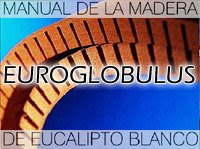
Fig. 4: Eucalyptus globulus: noble wood of Galicia. For over 50 years, eucalypt planted forests have been one of the very few available timber resources in Spain able to provide raw timber as to prepare 25 meter long solidwood pieces, a traditional industry based on timber knowledge and expert handling of this Galician adopted Australian timber from tree harvest to final processing at sawmill. Some uses of this timber support the employment of up to 10.ooo Galician people in other key sectors of the economy. (Click play to watch a video depicting on site preparation of long wood beams "madera maciza" in a harvest coupe of Galicia, Northwestern Spain)
This means that, for the third time in their nearly 200 years of cultivation history, eucalypts have become the most important timber group fraction for overall timber harvests in Galicia, and by extension, as Galicia supplies roughly 50% of Spanish yearly roundwood output, for the whole nation. The versatility of these Galician adopted Aussie timbers has positively impacted once again all the main industrial lines, and a surprising trend has emerged even for industrial processing not widely associated by the average Joe to this type of timbers: for the first time in history, the main hardwood lumber type used by the Galician sawmilling industry is sustainably produced Eucalyptus wood sourced from planted forests.

Fig. 5: During 2010, Galician organically grown Eucalyptus timber sourced from planted forests has become the most used hardwood lumber type for the Galician sawmilling industry, surpassing the processed volume of all other locally harvested hardwoods (oak, chestnut, cherry, etc.) combined. This type of local industrial segment starts in a locally grown tree and adds value for a whole local processing chain that ends up in luxury furniture exports and solidwood applications for structural uses, generating the highest amount of added value on timber products per unit of processed timber in Galicia that is fully injected in the regional economy (Click image to enlarge)
Interesting trend indeed, considering that Galician Eucalyptus harvests mean figures in the range of 25% of the total timber harvested annually in Spain, and that, besides its well recognized quality for the pulp & paper industrial segments, it is also increasingly used in board & panel segments, and also in saw-milling segments. Part of the later products, due to their quality and outstanding beauty, are consistently exported and, not being as directly dependent on the currently reduced activity of the Spanish building sector as some alternatives, have hence become a relatively safe haven in times of general contraction of the regional solidwood industry.
It is not too adventurous then to say that, after the maelstrom of the global financial crisis deeply impacted the economies of the whole world, affecting Galicia too, impacts on the timber industry were impossible to avoid, and considering the particularities of Spanish economy, the aftermath of the crisis still lingers on Spain and its Timber Reserve and will probably stay with us all for a while. However, a first tiny step, or good sign of the start of a recovery, has already happened. And one of the main drivers of such happening during 2010 has been... Galician eucalypt timber.
It is not so surprising then that, independently on whatever funding restrictions for afforestation caused by the lack of credit to the different governments of the EU, Spain or Galicia may exist... whatever the right or wrongs of public support to sustainable productive activities as tree growing is... and independently on whatever artificial conflict of interests created and maintained by whatever ignorant urbanite... 600.000 small tree growers of Galicia have taken their own step forward: some 40 million € of their own money, which grew on trees during the last decades and was harvested in 2010, is to be invested again during 2011 to start a new timber growing cycle by planting dozens of millions more trees. Why? Because they know, and you should know by now too, that you harvest what you sow.
BROADEN YOUR VIEWS: RELATED CONTENT
Fig 6: Galician forester, forest industry analyst & University of Vigo Forestry School professor Dr. Juan Picos explores the general economic situation surrounding the Global, European, and Galician timber industries during the peak and the aftermath of the Global Economic Crisis, outlining the different phenomena affecting offer & demand of timber products, and prospective trends for the medium term. (Click play to watch video)
Also at EUCALYPTOLOGICS...




Want to contact us?

Contact GIT Forestry Consulting - Eucalyptologics

GIT's Eucalyptology Topics
© 2007-2011 Gustavo Iglesias Trabado. Please contact us if you want to use all or part of this text and photography elsewhere. We like to share, but we do not like rudeness.


