Quickribbon

Pinusletter nº 6 - by Ester Foelkel

Share

by Ester Foelkel


Summary of Contents


Previous Issues


PinusLetter is a new creation of Celsius Degree, a vision for the development of cultivated forests and their products based on the concepts of technology, eco-efficiency, economy and social and environmental sustainability. The main stars of this newsletter will be tree species within genus Pinus. This free online publication will be first launched in Portuguese only but will include references to articles, websites and Pinus-Links at a global level. Hence, you will be redirected to visit sites in English, Spanish, French, in addition to Portuguese.


Grau Celsius - Celsius Degree - Celso Foelkel Eucalyptus WisdomCoordenação e Redação Técnica - Ester Foelkel & Celso Foelkel
Editoração - Alessandra Foelkel
GRAU CELSIUS: Tel.(51) 3338-4809
Copyrights © 2005-2008

Click to Read Full Story...

Tallest tree in Africa is ... you guessed... Eucalyptus

Share

Giant Eucalyptus in South Africa: the Grand Trees (I)

Gustavo Iglesias Trabado Contact GIT Forestry Consulting
GIT Forestry Consulting - Consultoría y Servicios de Ingeniería Agroforestal - www.git-forestry.com - EUCALYPTOLOGICS

We have previously seen at EUCALYPTOLOGICS several examples of Giant Eucalypt Trees around the world, both at their natural Australian forest habitats, or as the heritage of forestry pioneers overseas, covering Spain & Portugal in Europe, the United States in America or New Zealand in Oceania. Today, aided by a guest expert from the Southern Hemisphere, we explore what could easily be the tallest cultivated Eucalyptus in the world. Join us in a virtual trip to visit the Eucalyptus Giants of South Africa! Our first step in the walk takes us to Magoebaskloof, another Valley of the Giants.


O'CONNOR's GIANTS: MONUMENTAL EUCALYPTUS AT WOODBUSH FOREST, SOUTH AFRICA

by Izak van der Merwe (1)

More than one century ago, in 1906, a stand of Eucalyptus saligna was planted on Woodbush Estate in the Limpopo Province by one of South Africa’s early forestry pioneers, Alexander James O’Connor. Many of the trees have reached nowadays impressive heights measured at between 70 and 80 m. In 2003 the tallest of these trees was measured by a land surveyor at 81.5m tall (+265 ft).

Tallest tree in Africa: Giant Eucalyptus saligna at Woodbush Forest Reserve, South Africa / El arbol mas alto de Africa: Eucalipto saligna gigante en la Reserva Forestal de Woodbush, Sudafrica / by Izak van der Merwe / Gustavo Iglesias Trabado / GIT Forestry Consulting, Consultoría y Servicios de Ingeniería Agroforestal, Lugo, Galicia, España, Spain / Eucalyptologics, information resources on Eucalyptus cultivation around the world / Eucalyptologics, recursos de informacion sobre el cultivo del eucalipto en el mundo

Fig. 1: Tallest tree in Africa, 81.5 m height (+265 ft) Eucalyptus saligna at Woodbush Forest Reserve, South Africa. Photo courtesy Izak van der Merwe. (Click image to enlarge)


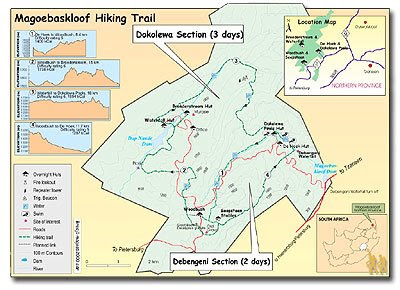
This stand of trees is not only the tallest in Africa, but also the tallest group of cultivated Eucalyptus in the Southern Hemisphere, and possibly in the world. For two decades these monumental trees have been a well-known landmark to hikers along the Magoebaskloof Trail, which among other points of interest, allows the trekker to visit O'Connor's Memorial.

Alexander James O'Connor epitaph

Fig. 2: AJ O'Connor epitaph at O'Connor Memorial, Magoebaskloof. Note the resemblance to Sir Christopher Wren's at St. Paul's Cathedral. Photograph courtesy Izak van der Merwe. (Click image to enlarge)

During a storm in September 2006 one of the giant Eucalyptus crashed to the ground and took the tallest tree down with it. A search will be done among this stand of trees to determine the new contender to the title of tallest tree in Africa.

Woodbush Forest Reserve is located in an extensive mountainous valley known as Magoebaskloof, where several other stands of giant Eucalyptus saligna thrive, all taller than 70 m. To some extent, this is another Valley of the Giants.

Alexander James O'Connor grave and epitaph

Fig. 3: O'Connor Memorial at Woodbush Forest Reserve, surrounded by giant Eucalyptus reaching 70 m height. Photo courtesy Izak van der Merwe. (Click image to enlarge)


The humid sub-tropical weather of this area of the country and its deep soils of granitic origin are thought to create the extra-ordinary growing conditions that led to many giant trees growing there.

These early O'Connor Giants might well have been inspirational for further Eucalyptus tree plantings taking place in the estates of the late Dr. Hans Merensky from the the 1930s ahead, opening the path for the Australian trees to become adopted as one of the major types grown nowadays in South African commercial timber plantations.


(1) = Izak van der Merwe is Senior Forestry Scientist at the Department of Water Affairs & Forests of the Republic of South Africa. Among other activities, and with the assistance of the Dendrological Society of South Africa he and DWAF have been charting South Africa's Champion Trees in order to help protect and preserve this global monumental natural heritage.


Want to know more?

Esterhuyse, von Breitenbach, Sohnge, Remarkable Trees of South Africa / Gustavo Iglesias Trabado / GIT Forestry Consulting, Consultoría y Servicios de Ingeniería Agroforestal, Lugo, Galicia, España, Spain / Eucalyptologics, information resources on Eucalyptus cultivation around the world / Eucalyptologics, recursos de informacion sobre el cultivo del eucalipto en el mundoEsterhuyse, Neels; Breitenbach, Jutta von & Sohnge, Hermien (2001) Remarkable Trees of South Africa. Briza Publications, Arcadia. 160 pp. ISBN: 978-1-875093-28-1

Voortrekker Map to Alexander James O'Connor epitaph Voortrekker Map of Magoebaskloof Hiking Trail (PDF 433KB) courtesy of Komatiland Ecotourism


Acknowledgements


EUCALYPTOLOGICS wants to express its gratitude to Rodrigo Giménez, Izak van der Merwe, the Department of Water Affairs & Forests of South Africa and the Dendrological Society of South Africa for their efforts at both sides of the Atlantic to identify and contribute to preserve remarkable trees in general and giant Eucalyptus in particular as natural heritage for future generations, and for contributing data and photography to make this small article delivered to readers in 94 countries around the world.


Department of Water Affairs and Forests, Government of the Republic of South Africa / Departamento de Aguas y Bosques, Gobierno de la República de Sudáfrica /  Gustavo Iglesias Trabado / GIT Forestry Consulting, Consultoría y Servicios de Ingeniería Agroforestal, Lugo, Galicia, España, Spain / Eucalyptologics, information resources on Eucalyptus cultivation around the world / Eucalyptologics, recursos de informacion sobre el cultivo del eucalipto en el mundo


Also in EUCALYPTOLOGICS...


Contact us / Subscribe to Eucalyptologics

Contact GIT Forestry Consulting / Contact Eucalyptologics / Contacto GIT Forestry Consulting / Contacto Eucalyptologics / Lugo, Galicia, Spain, EspañaContact GIT Forestry Consulting - Eucalyptologics

EUCALYPTOLOGICS: GIT Forestry Consulting Eucalyptus Blog / Information Resources on Eucalyptus Cultivation Worldwide / Forestry Engineering, Eucalyptus Seed, Eucalyptus Plants, Eucalyptus Wood, Eucalyptus Honey, Eucalyptus Essential Oil, Eucalyptus Forests, Eucalyptus Plantations, Eucalyptus Timber, Eucalyptus Lumber, Eucalyptus Furniture, Eucalyptus Veneer, Eucalyptus Plywood, Eucalyptus MDF Board, Eucalyptus Cellulose, Eucalyptus Paper, Eucalyptus Biomass, Eucalyptus Energy, Eucalyptus Floristry, Eucalyptus Foliage, Eucalyptus Garden / Ingenieria Forestal, Semilla de eucalipto, Plantas de eucalipto, Madera de eucalipto, Miel de eucalipto, Aceite Esencial de eucalipto, Bosque de eucalipto, Plantacion de eucalipto, Muebles de eucalipto, Tablero de eucalipto, MDF de eucalipto, Celulosa de eucalipto, Papel de eucalipto, Biomasa de eucalipto, Energia de eucalipto, Ramillo Verde Ornamental de Eucalipto, Jardin de EucaliptoGIT's Eucalyptology Topics

Subscribe to receive EUCALYPTOLOGICS via RSS

Subscribe to receive EUCALYPTOLOGICS via e-mail


© 2007-2008 Gustavo Iglesias Trabado. Please contact us if you want to use all or part of this text and photography elsewhere. We like to share, but we do not like rudeness.

Click to Read Full Story...

Eucalyptus Newsletter nº 15 - by Celso Foelkel

Share

by Celso Foelkel

Summary of Contents


Previous Issues


Eucalyptus Online Book & Newsletter are technical information texts written and made available free of charge to all people involved with the forestry and utilization of the Eucalyptus. It depends only on registering yourself to receive them.

Technical coordination - Celso Foelkel
Webmaster / editing - Alessandra Foelkel
Celsius Degree: Phone (+55-51) 3338-4809
Copyright © 2007-2010

This knowledge oriented service was made possible through sponsoring support provided by ABTCP - Brazilian Technical Association of Pulp and Paper and by Botnia, Aracruz, International Paper do Brasil, Conestoga-Rovers & Associates, Suzano & Votorantim Celulose e Papel. The opinions expressed in the texts are those of the author or coming from the referenced technical literature. They do not necessarily reflect the views of the sponsors.


Grau Celsius - Celsius Degree - Celso Foelkel Eucalyptus Wisdom

Click to Read Full Story...

Spinning Gums... in bloom

Share

Spinning Gum: cold hardy Eucalyptus from Alpine Australia
Notes on phenology and cultivation in cold temperate climates

Gustavo Iglesias Trabado Contact GIT Forestry Consulting
GIT Forestry Consulting - Consultoría y Servicios de Ingeniería Agroforestal - www.git-forestry.com - EUCALYPTOLOGICS

Eucalyptus perriniana have started blooming in Galicia this year. A bit of delayed this time, as we have observed them blooming since early June in previous years, they remain eye catching in any season none the less.

Spinning Gum, Eucalyptus perrininana flowering in Galicia, cold hardy ornamental eucalypt for cold temperate gardens / Eucalipto giratorio en floracion en Galicia, eucalipto resistente a las heladas para jardines atlanticos / Gustavo Iglesias Trabado / GIT Forestry Consulting, Consultoría y Servicios de Ingeniería Agroforestal, Lugo, Galicia, España, Spain / Eucalyptologics: Information Resources on Eucalyptus Cultivation Worldwide / Eucaliptologics: Recursos de Informacion sobre el Cultivo del Eucalipto en el MundoFig 1: Intermediate leaves and blooms of a Spinning Gum (E. perriniana) flowering in the Tablelands of Galicia (NW Spain). (Click image to enlarge)

First discovered in Tasmania by 1893 and named after forester George S. Perrin, the Spinning Gum or Eucalyptus perriniana is one of the examples of frost tolerant Eucalyptus having unique ornamental features. Its vernacular name makes emphasis on dry juvenile leaves, which are connate, so fused at their base to surround branchlets completely, detaching and spinning freely around themselves when wind blows.

Spinning Gum, Eucalyptus perrininana flowering in Galicia, cold hardy ornamental eucalypt for cold temperate gardens / Eucalipto giratorio en floracion en Galicia, eucalipto resistente a las heladas para jardines atlanticos / Gustavo Iglesias Trabado / GIT Forestry Consulting, Consultoría y Servicios de Ingeniería Agroforestal, Lugo, Galicia, España, Spain / Eucalyptologics: Information Resources on Eucalyptus Cultivation Worldwide / Eucaliptologics: Recursos de Informacion sobre el Cultivo del Eucalipto en el MundoFig 2: Intermediate leaves and early flower buds of a Spinning Gum (E. perriniana) during winter in the Tablelands of Galicia (NW Spain). (Click image to enlarge)


But this striking ornamental foliage is not the only source of interest from an horticultural standpoint. When cultivated in suitable climate, the Spinning Gum flowers freely and profusely yet in juvenile leaf stage, adding seasonal interest to its cultivation.

Spinning Gum, Eucalyptus perrininana flowering in Galicia, cold hardy ornamental eucalypt for cold temperate gardens / Eucalipto giratorio en floracion en Galicia, eucalipto resistente a las heladas para jardines atlanticos / Gustavo Iglesias Trabado / GIT Forestry Consulting, Consultoría y Servicios de Ingeniería Agroforestal, Lugo, Galicia, España, Spain / Eucalyptologics: Information Resources on Eucalyptus Cultivation Worldwide / Eucaliptologics: Recursos de Informacion sobre el Cultivo del Eucalipto en el MundoFig 3: Juvenile leaves and blooms of a Spinning Gum (E. perriniana) during summer in the Tablelands of Galicia (NW Spain). Note the swollen flower buds approaching anthesis. (Click image to enlarge)

Native to high montane plateaux in the subalpine regions of Eastern Victoria and South-Eastern New South Wales, and also to limited areas in Central Tasmania, it is distributed in scattered and normally reproductively isolated populations, possibly meaning variation in its attributes depending on seed provenance or lineages in cultivation.

Spinning Gum, Eucalyptus perrininana flowering in Galicia, cold hardy ornamental eucalypt for cold temperate gardens / Eucalipto giratorio en floracion en Galicia, eucalipto resistente a las heladas para jardines atlanticos / Gustavo Iglesias Trabado / GIT Forestry Consulting, Consultoría y Servicios de Ingeniería Agroforestal, Lugo, Galicia, España, Spain / Eucalyptologics: Information Resources on Eucalyptus Cultivation Worldwide / Eucaliptologics: Recursos de Informacion sobre el Cultivo del Eucalipto en el MundoFig 4: General outlook of a reproductively mature Spinning Gum (E. perriniana) during summer and winter prior to summer bloominmg in the Tablelands of Galicia (NW Spain). (Click image to enlarge)

Referenced as cold hardy to lowest minima in the range of -15ºC, this eucalypt can be safely cultivated in USDA Zone 8 and the mildest part of USDA Zone 7. The pictured specimen, first of its kind taken to blooming stage in Galicia, thrives in a frost prone area in USDA Zone 8b, and has survived unscathed lowest minima of -10ºC, not affecting its crown development or flowering process.


Phenologic notes on E. perriniana in Galicia

  • Flower bud initiation: May/June (late spring, early summer)
  • Flower bud maturity: +10 /+12 months (late spring, summer)
  • Flowering period: May/August (summer, peak in July)
  • Seed pod maturity: +20 /+25 months since flower bud initiation
  • Simultaneous reproductive cycles: 1 cycle of immature flower buds + 1 cycle of seed pods in maturation + 1 cycle of ripe or senescent seed pods can be present at once in the same specimen

Also in EUCALYPTOLOGICS...


Eucalyptus seed capsules, flower buds, immature seed pods, mature seed pods, senescent seed pods, capsule collection and seed extraction methodology / Semilla de eucalipto, flor de eucalipto, capsulas inmaduras de eucalipto, capsulas maduras de eucalipto, capsulas extramaduras de eucalipto y metodos para cosecha de semilla de eucalipto / Eucalyptus pauciflora seed / Snow Gum Seed / Semilla de Eucalipto de las Nieves / GIT Forestry Consulting, Consultoría y Servicios de Ingeniería Agroforestal, Lugo, Galicia, España, Spain / Eucalyptologics, information resources on Eucalyptus cultivation around the world / Eucalyptologics, recursos de informacion sobre el cultivo del eucalipto en el mundoReproductive cycle and seed maturation process in a Snow Gum Eucalyptus tree.


Contact us / Subscribe to Eucalyptologics

Contact GIT Forestry Consulting / Contact Eucalyptologics / Contacto GIT Forestry Consulting / Contacto Eucalyptologics / Lugo, Galicia, Spain, EspañaContact GIT Forestry Consulting - Eucalyptologics

EUCALYPTOLOGICS: GIT Forestry Consulting Eucalyptus Blog / Information Resources on Eucalyptus Cultivation Worldwide / Forestry Engineering, Eucalyptus Seed, Eucalyptus Plants, Eucalyptus Wood, Eucalyptus Honey, Eucalyptus Essential Oil, Eucalyptus Forests, Eucalyptus Plantations, Eucalyptus Timber, Eucalyptus Lumber, Eucalyptus Furniture, Eucalyptus Veneer, Eucalyptus Plywood, Eucalyptus MDF Board, Eucalyptus Cellulose, Eucalyptus Paper, Eucalyptus Biomass, Eucalyptus Energy, Eucalyptus Floristry, Eucalyptus Foliage, Eucalyptus Garden / Ingenieria Forestal, Semilla de eucalipto, Plantas de eucalipto, Madera de eucalipto, Miel de eucalipto, Aceite Esencial de eucalipto, Bosque de eucalipto, Plantacion de eucalipto, Muebles de eucalipto, Tablero de eucalipto, MDF de eucalipto, Celulosa de eucalipto, Papel de eucalipto, Biomasa de eucalipto, Energia de eucalipto, Ramillo Verde Ornamental de Eucalipto, Jardin de EucaliptoGIT's Eucalyptology Topics

Subscribe to receive EUCALYPTOLOGICS via RSS

Subscribe to receive EUCALYPTOLOGICS via e-mail


© 2007-2008 Gustavo Iglesias Trabado. Please contact us if you want to use all or part of this text and photography elsewhere. We like to share, but we do not like rudeness.

Click to Read Full Story...

Eucalyptus poisoning soil? (I)

Share

Seven key issues on Eucalyptus and alelopathy
Or seven reasons why stating eucalypts poison soils is mostly... bullshit

Gustavo Iglesias Trabado Contact GIT Forestry Consulting
GIT Forestry Consulting - Consultoría y Servicios de Ingeniería Agroforestal - www.git-forestry.com - EUCALYPTOLOGICS


We frequently receive inquiries at EUCALYPTOLOGICS from concerned gardeners, horticulturalists and even
Eucalyptus timber plantation owners in regard to the widespread notion of these trees "being poisonous to the soil" and "dangerous for understorey flora". Today we hope to help throw some light over this myth.


Giant Eucalyptus camaldulensis and understorey at Inca Botanical Garden, Malaga, Spain, by Dan Anderson, Exploring the World of Trees, a Tree Species Blog / Eucalipto rojo gigante y sotobosque en el Jardin Botanico Inca de Malaga, España, por Dan Anderson, Tree Species / Gustavo Iglesias Trabado / GIT Forestry Consulting, Consultoría y Servicios de Ingeniería Agroforestal, Lugo, Galicia, España, Spain / Eucalyptologics: Information Resources on Eucalyptus Cultivation Worldwide / Eucaliptologics: Recursos de Informacion sobre el Cultivo del Eucalipto en el MundoFig. 1: Healthy understorey plants growing under an Eucalyptus tree. Image courtesy Dan Anderson, www.tree-species.com (Click image to enlarge)

We picked this example to ellaborate on this particularly interesting topic due to the excellent conditions of this tree as evidence of myth being myth. Approaching one hundred years old, the giant E. camaldulensis at Inca Botanical Gardens has had enough time to deplete and poison the soil around it. Doom predictions would say nothing could be growing near it for more than 50 years. Then why a healthy understorey of bromeliads, palms and lush subtropical plants is thriving under this evil Eucalyptus?

Giant Eucalyptus camaldulensis and understorey at Inca Botanical Garden, Malaga, Spain, by Dan Anderson, Exploring the World of Trees, a Tree Species Blog / Eucalipto rojo gigante y sotobosque en el Jardin Botanico Inca de Malaga, España, por Dan Anderson, Tree Species / Gustavo Iglesias Trabado / GIT Forestry Consulting, Consultoría y Servicios de Ingeniería Agroforestal, Lugo, Galicia, España, Spain / Eucalyptologics: Information Resources on Eucalyptus Cultivation Worldwide / Eucaliptologics: Recursos de Informacion sobre el Cultivo del Eucalipto en el MundoFig. 2: Monumental Eucalyptus camaldulensis growing among palms in the Inca Botanical Garden of Malaga, Spain. Image courtesy Dan Anderson, www.tree-species.com (Click image to enlarge)


The answer could not be more simple:
because a plant causing alelopathic effects on its surrounding habitat is not equivalent to a plant keeping infinite arsenals for chemical warfare that affect everything around it.


SEVEN KEY QUESTIONS ON EUCALYPTUS POISIONING SOILS


Question 1: What is alelopathy?


Alelopathy defines a natural type of interaction between different plants, in which one of them has adapted to release to a defined space around it an amount of natural organic chemical compounds during their normal biologic cycle. These alelo-chemicals can, in certain circumstances, add to other natural competitive advantages result of evolutive adaptation to favour the survival, establishment or reproductive maturity of a certain plant against another in a defined space where resources (light, water, nutrients) are limited.


Question 2: Are
Eucalyptus alelopathic plants?

Yes, since Eucalyptus are plants and all plants are alelopathic to some extent, as they all release organic chemical compounds when their discarded biomass degrades, and these natural organic chemical compounds leach on to the soil, where they interact with other elements of local biota.


Question 3: Does alelopathy in
Eucalyptus have something to do with they being exotic species?

No. In Australia, where they are native, they also cause alelopathic impacts on surrounding flora. And in any habitat you can find native plants causing the same sort of impacts on surrounding biota in varying degrees. Alelopathic and exotic are two independent concepts, and linking both as the two parts of a cause-effect relationship shows deep ignorance on basic biological and ecological processes. Pay attention when you see both terms in the same sentence, statement or argument in a discussion, as it normally will give you hints on the speaker.


Question 4: How do
Eucalyptus alelopathic effects impact other plants?

Following the same pattern than any other plant causing alelopathic effects: in several ways, but very rarely as a single factor.

The combined action of at least...
  • Natural events to which many Eucalyptus species have adapted their reproductive processes (e.g. fire) while other plants have not, making less desirable habitat for non adapted to some plants while favouring others
  • Fast development of root systems compared to some plants, which can give them quicker access to soil moisture and making less desirable habitat for water demanding plants there while favouring others
  • Quick canopy development and litter formation, meaning quick shading of understorey and making less desirable habitat for full sun plants there while favouring others
  • And the release of natural organic alelo-chemical compounds to the soil, which can inhibit germination of certain plant seeds while favouring others or contribute directly or indirectly to the slower growth of some plants while favouring others
... can cause impacts on any other element of the biota around Eucalyptus. Each of the other plants thrives between thresholds for any given natural factor affecting survival and growth. Probably many other factors could also be included, but those four are enough to illustrate the complex relationships of biota and environment.

For the case of alelo-chemical compounds considered as a single factor in this equation, each different plant taxon will behave differently, some totally tolerating the available amount of alelo-chemicals perfectly, some being affected to a certain degree, and some being non tolerant. It is a dynamic process, and it activates further adaptative processes in all the other plants. Those unaffected will keep growing and reproducing, those non critically affected will evolve towards tolerance given enough genetic variability so some will keep on growing and reproducing, and those non tolerant will be replaced in their ecologic niche by other organisms that will keep growing and reproducing. Evolution under our noses.

A dynamic ecosystem in continuous adaptation. But not anihilation, sterilisation or desertification. Again,
pay attention when you any of these or similar terms together in the same sentence, statement or argument in a discussion, as it normally will give you hints on the speaker.


Question 5: Can we safely grow other plants under Eucalyptus in our gardens?

Yes, but results will largely depend on... what your garden is like, what your Eucalyptus are like, what plants you are planting under them and how you manage this small ecosystem. Each plant will have a maximum and minimum treshold for each main restriction to survival and growth, be it water availability and use, tolerance to shade, abundance of nutrients or tolerance to any of the organic compounds present in soil and being released by the Eucalyptus and any other plant nearby. Or any other factor having influence in the final outcome.

Each of your gardens will become a real laboratory and you will have the opportunity to observe what is going on and realize that you cannot blame alelopathy for your other plants dying if you have not watered them during that severe summer drought.


Question 6: What about cultivated forests based on Eucalyptus as main timber species?

This question alone could yield a very long argumentation. It is more suitable as a separate ellaboration, since multiple concepts need to be introduced during its discussion, many of them related to environmental impact assessment, landscape scale considerations, management regimes, and the dynamics in space and time of this more complex than a garden but yet simplified ecosystem any cultivated forest is, irrespectively of the tree species in consideration and its character of native or not to a particular ecosystem.

But, to not let you go with empty pockets, enough mentioning quickly that, the same way you can grow garden plants in the understorey of an eucalypt, many possibilities arise for a wider scale policulture (simultaneous cultivation on the same soil) involving Eucalyptus as tree cover. There are countless examples of these agroforestry systems in all five continents, from relatively simple ones involving pasture or natural grazelands plus Eucalyptus trees (silvopasture) to relatively complex serial crops (multicrop) as sugarcane plus Eucalyptus; maize plus Eucalyptus; pineapple plus Eucalyptus; coffee plus Eucalyptus; Leucaena plus Eucalyptus; cotton plus Eucalyptus; rice, beans and Eucalyptus... as many combinations as adventurous agronomists.

As you can imagine, if the myth of Eucalyptus sterilising soils or making it unusable for every other plant sustained itself, none of these would be possible. But they are. Yet once again, pay attention when you see any of these or similar terms together in the same sentence, statement or argument in a discussion, as it normally will give you hints on the speaker.


Question 7: Why is the myth of
Eucalyptus poisoning soils so popular then?

Ahh... now that is a good question, isn't it? It has also many answers, but let's keep it simple.

Because the average urbanite Western citizen is deeply ignorant on agriculture, forestry, the dynamics of ecosystems or long term evolution of landscape parameters by human action.

Because the average gardener, farmer, landowner or investor in trees is too busy making a project work to find time for independent assessment of such questions.

And because there are individuals with either high levels of ignorance, narrow vision or enough knowledge but despicable moral behaviour who keep promoting myth over science and propagating fallacies to discredit one of the most versatile, efficient, productive and diverse plant groups in the world. Genus Eucalyptus.

To all these but especially the last kind, EUCALYPTOLOGICS cordially extends an invitation to join foresters, agronomists and farmers of the world for manual understorey control on those plants that do not grow under Eucalyptus, to grab a tool and labour the understorey crops of Eucalyptus based agroforestry systems that cannot grow on sterilised soils and to enjoy the wildlife that cannot live under the protection of these trees. You can bet that a huge percent of them won't abandon their comfortable chairs for the challenge and will keep behaving like ostriches.

EUCALYPTOLOGICS: GIT Forestry Consulting Eucalyptus Blog / Information Resources on Eucalyptus Cultivation Worldwide / Forestry Engineering, Eucalyptus Seed, Eucalyptus Plants, Eucalyptus Wood, Eucalyptus Honey, Eucalyptus Essential Oil, Eucalyptus Forests, Eucalyptus Plantations, Eucalyptus Timber, Eucalyptus Lumber, Eucalyptus Furniture, Eucalyptus Veneer, Eucalyptus Plywood, Eucalyptus MDF Board, Eucalyptus Cellulose, Eucalyptus Paper, Eucalyptus Biomass, Eucalyptus Energy, Eucalyptus Floristry, Eucalyptus Foliage, Eucalyptus Garden / Ingenieria Forestal, Semilla de eucalipto, Plantas de eucalipto, Madera de eucalipto, Miel de eucalipto, Aceite Esencial de eucalipto, Bosque de eucalipto, Plantacion de eucalipto, Muebles de eucalipto, Tablero de eucalipto, MDF de eucalipto, Celulosa de eucalipto, Papel de eucalipto, Biomasa de eucalipto, Energia de eucalipto, Ramillo Verde Ornamental de Eucalipto, Jardin de EucaliptoGIT's Eucalyptology Topics

Subscribe to receive EUCALYPTOLOGICS via RSS


© 2007-2008 Gustavo Iglesias Trabado. Please contact us if you want to use all or part of this text and photography elsewhere. We like to share, but we do not like rudeness.

Click to Read Full Story...


GIT's Eucalyptology Topics
Subscribe via RSS Subscribe via e-mail