




Gustavo Iglesias Trabado 
GIT Forestry Consulting - Consultoría y Servicios de Ingeniería Agroforestal - www.git-forestry.com - EUCALYPTOLOGICS
GIT Forestry Consulting - Consultoría y Servicios de Ingeniería Agroforestal - www.git-forestry.com - EUCALYPTOLOGICS
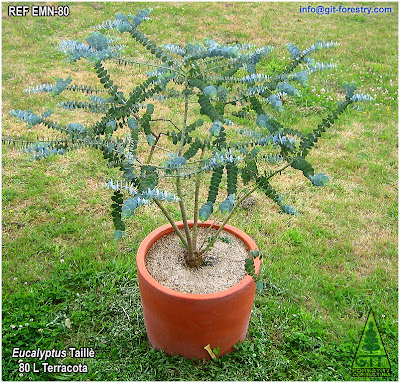
Many things are possible with Eucalyptus. From amazing giants planted out in forests and parks, to potted plants outdoors or indoors. Cold hardy varieties can be grown in USDA Plant Hardiness Zones 10 to 7, so it is all about good species choice, good seed choice, and good plant choice.

 Sculpted Eucalyptus. (Click image to enlarge)
Once those three initial conditions are reasonably satisfied, the only other three things needed are patience, time, and know how. Patience to observe each individual specimen, work out its natural branch architecture and look ahead towards a desired shape. Time to take care of the plants properly, especially for appropriate supplies of light, water and nutrients. And know how to use physiologic and biologic processes in Eucalyptus nursery stock to your advantage by applying the suitable horticultural care and pruning techniques at suitable time.
Also in Eucalyptologics...
 Ornamental Eucalyptus: specialised Nursery Production
 Ornamental Eucalyptus: Sculpted 'Big Bonsai' for outdoor use
 Ornamental Eucalyptus? You must be kidding!
 Ornamental Eucalyptus Worldwide: Bark
 Contact GIT Forestry Consulting - Eucalyptologics
 GIT's Eucalyptology Topics
 Subscribe to receive EUCALYPTOLOGICS via RSS
© 2007-2008 Gustavo Iglesias Trabado. Please contact us if you want to use all or part of this text and photography elsewhere. We like to share, but we do not like rudeness.